Commonly Asked Questions about Travelling
Below is a list of useful questions that we are commonly asked by guests preparing to join Vietnam Backroads – Vietnam Cycling Tours on one of our guided group cycling adventures. Please take a few moments to read through these questions and answers, as they will help you prepare for your journey in Vietnam and Cambodia. If you require any additional information or assistance, our team at Vietnam Backroads is always available and happy to help.
1. What We Do Not Recommend Using on Our Cycling Trips
We do not recommend using cleated shoes or clipless pedals on our cycling trips. Although these specialized systems are designed to improve pedaling efficiency and conserve energy over long distances, they are not ideal for the nature of our tours. Our cycling adventures focus on exploring quiet back roads, charming villages, cultural landmarks, and beautiful countryside landscapes. Many of these routes include narrow, uneven paths where frequent stops, dismounts, and slow, careful riding are necessary. Using cleated shoes or clipless pedals can increase the risk of accidents, especially when you need to stop suddenly or navigate tight spaces at low speeds.
Please Remember!
Our tours are designed for you to enjoy the journey—immersing yourself in local life, discovering historical sites, visiting hidden villages, and experiencing the natural beauty of Vietnam. They are not intended for fast riding or racing. Safety, comfort, and the freedom to stop easily and move around comfortably are far more important on our cycling holidays. Relax, enjoy the pace, and embrace the authentic experiences that make each journey unique.
Enjoy the ride, embrace the adventure, and experience the true essence of the places we explore together!
2. Are vehicle support services available throughout the entire trip?
Yes! Our vehicle support services are available throughout your entire journey, ensuring a seamless and worry-free experience.
Luggage Safety: Your luggage is securely stored and carefully looked after in our support vehicles at all times during the trip.
Van/Minibus Support: A dedicated air-conditioned van or minibus accompanies the group from start to finish, transporting travelers, luggage, and providing backup support for cyclists along the way
Truck for bike transportation: A support truck carries all bicycles, spare bikes, and necessary equipment, ensuring that everything you need is readily available throughout the journey.
Small group support: For small groups of 2 to 4 travelers, we provide a single air-conditioned van that comfortably accommodates all cyclists, their luggage, and bicycles. This vehicle offers full support from the beginning to the end of the trip, ensuring a comfortable and efficient travel experience. This comprehensive support system allows you to focus entirely on enjoying your cycling adventure while our team takes care of the logistics.
3. What Do We Provide on Our Cycling Trips?
To ensure a safe, smooth, and enjoyable cycling experience, we provide a full range of support services and essential equipment, including.
Helmets, bottled water, and spare Bikes; Each cyclist is provided with a helmet for safety, plenty of bottled water to stay hydrated, and access to spare bikes in the event of mechanical issues.
Professional bike mechanic: A professional bike mechanic accompanies the group throughout the trip and is available to assist with any repairs or adjustments needed along the way, ensuring a worry-free riding experience.
First aid kits, tool Kits, and bike pumps: We carry comprehensive first aid kits for minor injuries, as well as complete tool kits and bike pumps to handle on-the-spot repairs and maintenance.
Comprehensive support throughout the journey: Our experienced team is dedicated to providing reliable support every step of the way, allowing you to focus on enjoying the ride, the scenery, and the unique cultural experiences along the route. Your safety, comfort, and overall cycling experience are our top priorities throughout the journey.
4. Are bikes and E-bikes included in the tour cost?
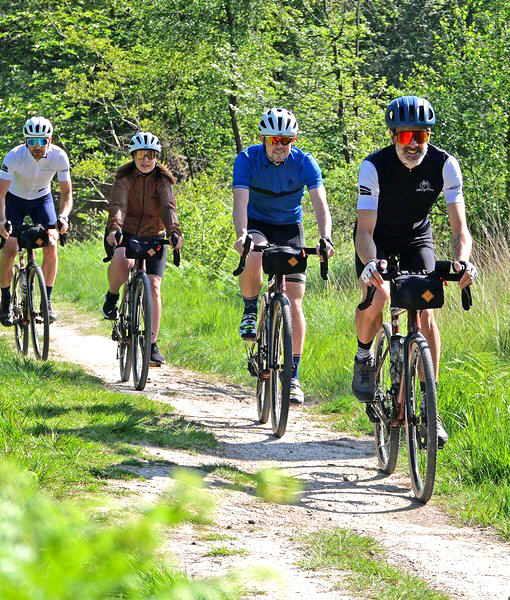
The availability of bikes and e-bikes depends on the tour you book. We offer a range of high-quality bicycles, including Mountain Bikes (MTBs), E-Bikes, and Gravel Bikes with flat handlebars, and we will provide the exact type of bike you request.
For most of our cycling tours, we recommend Mountain Bikes because they are well-suited to the varied road conditions and terrain found throughout Vietnam. However, bike rental is not included in the tour price unless specifically stated in the tour itinerary. The tour cost, listed in US dollars per person, covers the land arrangements and support services only. Bicycle rental fees are charged separately and must be added to the tour price.
We provide lightweight, well-maintained bicycles from leading brands such as Trek and Giant to ensure a comfortable and enjoyable riding experience. Our Trek and Giant Mountain Bikes are equipped with either 27.5 or 29-inch wheels, making them ideal for a wide range of road surfaces and cycling conditions. Whether you choose a Mountain Bike, Gravel Bike, or E-Bike, you can be confident that your bicycle will be professionally maintained and ready for your adventure.
5. What should I bring on a short cycling trip?
For a smooth and enjoyable cycling adventure, we recommend bringing the following essentials:
Lightweight luggage: Pack light to make traveling easier and more comfortable.
Comfortable clothing: Choose breathable, quick-drying clothes suitable for outdoor activities.
Cycling gloves: Protect your hands and improve your grip on the handlebars.
Sunscreen and sunglasses: Protect yourself from the sun and stay comfortable throughout your ride.
Mosquito repellent: Keep mosquitoes and other insects at bay, especially when cycling through rural and countryside areas.
Camera or smartphone: Capture the beautiful landscapes, local villages, and memorable moments along the way.
Helmet and water bottles: Helmets and water are provided during the tour, but you are welcome to bring your own helmet and water bottles if you prefer using your personal gear. Pack wisely, travel light, and get ready for an unforgettable cycling experience!
6. What personal items should I bring for long cycling trips?
For your comfort and protection, we highly recommend bringing lightweight clothing, sunscreen, cycling gloves, arm sleeves, sunglasses, and mosquito repellent. If you plan to participate in a long ride or an extended cycling tour, it is a good idea to bring personal gear that you are familiar with and comfortable using. We suggest bringing:
Cycling shoes or sneakers
Cycling shorts
Personal pedals (if you prefer your own clipless or flat pedal system)
Cycling computer or GPS device
CamelBak or hydration backpack
Cycling jerseys and padded shorts
Additionally, for longer trips, you may wish to bring the following items if you have specific preferences:
Your own saddle (bike seat)
Personal helmet
Water bottles (although we provide water bottles, bringing your own can enhance your comfort and hydration)
If you enjoy documenting your rides, we also recommend bringing a handlebar camera mount to securely attach your action camera during the journey. While we provide essential cycling equipment and support, having your own preferred gear can make your cycling experience more comfortable, enjoyable, and personalized—especially on longer adventures.
7. What clothes, bags, and shoes should I use for daily cycling?
Clothing: Wear comfortable clothing suitable for cycling, such as cycling shorts, jerseys, or lightweight pants. Cycling-specific apparel is designed to wick away sweat, reduce chafing, and enhance comfort, especially during longer rides.
Shoes: Choose cycling sandals, cycling shoes, or comfortable sneakers. All are excellent options for daily cycling. However, avoid wearing indoor slippers or casual sandals, as they are not designed for outdoor riding and may be unsafe or uncomfortable.
Bags: Use cycling bags that are compact, secure, and properly fitted. Bulky or loosely attached bags can shift while riding, causing discomfort and distraction. A well-fitted bag helps ensure a safer, smoother, and more enjoyable cycling experience.
8. How many people are required for the trip to be guaranteed to depart?
If you are two travelers looking to join a group tour but cannot find a guaranteed departure that fits your preferred dates, simply let us know. We are happy to open a new departure based on your schedule. Your chosen departure date will be listed as Guaranteed Departure, allowing other travelers to join and share the experience.
9. What accommodation do we provide on the entire trip?
At Vietnam Backroads - Vietnam Cycling Tours, we carefully select accommodations to ensure you have a comfortable and enjoyable stay throughout your journey. Each detailed itinerary on our website clearly shows the hotel names, homestays, and star ratings based on the regions and destinations you will visit. Our tour operators choose the best available hotels to match the trip's itinerary. However, travelers may request to change hotels if they wish—depending on the category of the hotel requested, we will revise the tour price accordingly.
In many small towns or non-tourist destinations, options may be limited, and 2-star hotels or equivalent local accommodations are often the best available choices.
A. Hotel categories
2–3 Star Hotels: Typically selected for destinations where downtown areas are not major tourist centers.
3–4 Star Hotels: Our preferred standard for most trips, offering a balance of comfort, service, and quality.
5-Star Hotels: Available mainly in major cities and popular tourist destinations. Travelers can request to upgrade to 5-star hotels in big cities. However, please note that in remote regions or less-visited areas, luxury and 5-star hotel options may not be available.
B. Rooms types:
Double Room: For couples.
Twin Shared Room: For fellow riders of the same gender.
Triple Room: For families of three people.
Single Room: Available upon request. A single supplement fee will apply if you wish to have your own private room.
Luxury 5-Star Accommodation: We can arrange 5-star hotels for travelers seeking luxury accommodation options in cities where available.
For solo travelers joining group tours who request a twin-shared room:
If the group size results in an odd number of travelers, and no suitable roommate is available, you will automatically receive a single room at no additional charge.
Important Note:
Vietnam Backroads - Vietnam Cycling Tours Company Limited reserves the right to offer alternative accommodations of similar standards if the originally planned hotels or homestays are overbooked or unavailable at the time of booking.
10. Is there internet access to all the accommodations on the trip?
Internet technology in Southeast Asian countries has been developing rapidly, even in rural villages where our daily cycling routes pass through. All hotels and homestays included in your trip — whether located in towns or countryside villages — are equipped with reliable and fast internet access.
For travelers who prefer to stay connected while biking daily, it’s very easy to access the internet by using mobile 4G SIM cards, available with various data packages and pricing options. Popular mobile service providers in Vietnam include:
- VinaPhone
- MobiFone
- Viettel Telecom
We highly recommend using a Viettel SIM card. Viettel belongs to the Vietnam Army and has the most extensive mobile network coverage, with antennas stretching from major cities to remote forests and border areas. This ensures excellent mobile internet connectivity throughout your journey, even in more isolated regions.
11. Which ages to join in your guided cycling tours?
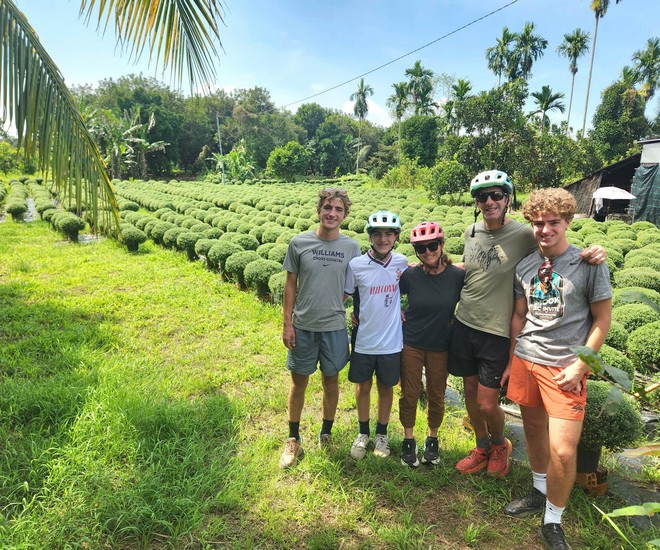
Children must be at least 8 years old to join our guided cycling tours and are suitable for trips in flatland areas such as the Mekong Delta region. Teenagers can participate in longer cycling trips, depending on their fitness level and cycling experience.
We warmly welcome all adults aged 18 to 65 years old on our tours. Whether you're an avid cyclist or simply seeking an active adventure, our routes are designed with flexibility to suit different abilities and preferences.
12. Can I use a pedal cleat on my trip?
You are welcome to use pedal cleats on your trip; however, they are highly recommended mainly for long rides and extended cycling tours. For trips through the Mekong Delta region, we do not recommend using pedal cleats. This is because the routes often include many winding single tracks, dirt trails, small bridges over canals, and narrow paths through villages and local markets, where the paths can be crowded and require frequent stops. In such conditions, cleats can be inconvenient and even unsafe. For these reasons, standard cycling shoes or sneakers are a better choice for Mekong Delta cycling adventures.
13. Do you provide fully support vehicles on the whole trip?
Yes, we provide fully-supported private vehicles for the entire trip to ensure your comfort and safety. All your luggage, suitcases, and day bags will be safely looked after and transported daily during your cycling journey.
Depending on the group size, we arrange different types of support vehicles:
Small Group: 2 to 4 people
We provide an A/C Mercedes Sprinter 16-seater van to support riders throughout the trip.
The van accommodates all travelers, luggage, and bikes.
Four rows of seating are available, with two people per row.
The third row is used for luggage and suitcases.
The last row of seats is folded to upload and secure the bikes.
Medium Group: 5 to 7 people
Two vehicles are arranged for full support on the entire trip:
A 16-seater van to transport all riders, luggage, and suitcases.
A small truck to carry all bikes, spare bikes, tool kits, iceboxes, and related equipment.
Large Group: 8 to 14 people
We provide: One minibus to carry all riders, luggage, and suitcases.
One truck dedicated to transporting bikes, spare bikes, water, cold drinks, fruits, snacks, and an icebox.
Extra-Large Group: 15 riders or more (over 20 people)
We arrange: Two vans, one minibus, and one truck to escort the large group.
A professional guide and support team to manage logistics and provide the best service to ensure a smooth, enjoyable cycling experience.
Throughout the journey, our support vehicles stay close to the group, allowing riders to rest whenever needed and ensuring that assistance, refreshments, and bike services are always readily available.
14. What happens in case of injury while on the tour?
Your safety is our top priority. All of our licensed guides are professionally trained in first aid and are prepared to assist in case of any injury during the tour. In addition, we provide a 24/7 emergency contact number at all the destinations where we operate, ensuring immediate support whenever needed.
As part of our commitment to your well-being, local insurance coverage is included as a compulsory measure. Our support vehicles are always nearby throughout the journey, ready to assist at a moment’s notice. If needed, you can quickly reach out to our team, and help will be right in your hands.
15. Travel Insurance:
Vietnam Backroads – Vietnam Cycling Tours does not provide travel insurance. We strongly recommend that all travelers purchase comprehensive travel insurance prior to their trip.
While our cycling guides are fully licensed and professionally trained in first aid, and a first aid kit is available in our support van at all times, having your own travel insurance ensures additional peace of mind and full protection in case of unforeseen events.
16. How can I get a visa for Vietnam?
Most nationalities require a visa in advance to enter Vietnam. However, citizens of countries that have signed a bilateral visa exemption agreement with Vietnam may be eligible for visa-free entry for a limited period.
Tourist Visa:
A tourist visa is typically valid for 15 to 30 days.
You can obtain a tourist visa at Vietnamese Embassies or Consulates abroad, or apply online.
To apply through an embassy or consulate, you should send your application form, passport photos, and the required fee. If you wish to receive your visa by post, be sure to provide a stamped, self-addressed envelope.
You can also contact the nearest Vietnamese Embassy or Consulate for assistance. A list of Vietnamese Embassies and Consulates worldwide is available on official embassy websites.
Visa on Arrival (VOA):
Visa on arrival is available only if you enter Vietnam by air at one of the three international airports:
Noi Bai Airport (Hanoi)
Tan Son Nhat Airport (Ho Chi Minh City)
Da Nang Airport (Da Nang)
To obtain a visa on arrival, you must first get a pre-approved visa letter (also known as a visa approval letter) through a licensed Vietnamese travel agency.
With the approval letter, you can board your flight and receive your visa stamp upon arrival at the airport in Vietnam.
Important Notes:
Visa on arrival is not applicable if you plan to enter Vietnam by land or sea — in those cases, you must obtain a visa in advance through an embassy or consulate.
Ensure your passport is valid for at least six months beyond your intended stay in Vietnam.
Check for the latest visa policies, as regulations may change.
17. How can I get a visa for Cambodia?
A Cambodian visa can be easily obtained upon arrival at Phnom Penh and Siem Reap International Airports. The visa fee is US$20, and travelers are required to bring two passport-sized photos for the visa application.
Visas are also available at major land border crossings between Thailand and Cambodia as well as Vietnam and Cambodia.
In addition, travelers can apply for a Cambodia E-Visa online before their trip. The online visa is convenient and can be accessed via the official website: https://www.evisa.gov.kh/. The E-Visa fee is US$30.
Visa Exemptions:
Nationals from the following countries do not require a tourist visa to enter Cambodia:
Singapore, Malaysia, Brunei, Laos, Vietnam
18. How can I get a visa to Laos?
A 15-day visa on arrival can be easily obtained at all international airports and most land border crossings in Laos. Visa fees vary depending on nationality: approximately US$42 for Canadian citizens, US$35 for citizens of the USA, the UK, and most European countries, and US$30 for Australian and other nationalities.
To apply for a visa on arrival, you will need:
A valid passport
A passport-sized photo
A completed visa application form (your guide can usually provide this in advance)
Payment in US dollars for the visa fee
Please note that at some land border crossings, you may be asked to pay a small additional fee (US$1–3) for overtime, weekend, or administrative costs, which can vary from one crossing to another.
Alternatively, you can obtain a visa in advance from a Lao consulate abroad, which is typically valid for 30 days.
Important: When entering Laos, ensure that you receive an official immigration entry stamp in your passport. Entering the country without this stamp—even if you have a visa—may result in fines or other penalties.
19. How much are the airport taxes?
Airport Taxes at International Airports in Vietnam: Airport taxes are generally included in the price of your international flight ticket when departing from Vietnam. Therefore, no additional payment is required at the airport upon departure.
Airport Taxes at International Airports in Cambodia: For departures from Cambodia:
The international airport tax is USD 25 per person.
The domestic airport tax is USD 6 per person.
These taxes must be paid in cash at the airport before departure.
Please note: Travelers exiting Cambodia by land border crossings are not required to pay any departure tax.
20. Luggage and Day Bags Information
Lightweight Suitcases: Your main luggage, such as lightweight suitcases, will be securely stored in the A/C van, minibus, or in the compartment of the minibus, depending on the size of the group and the type of vehicle used. All your larger luggage will be transported by our support vehicles throughout the journey.
Small Bags (Day Bags): Please prepare a small day bag to carry essential personal items that you may need during the ride. These can include your camera, GoPro, sunscreen, sunglasses, personal documents, and other daily necessities. Keep your day bag easily accessible, as your main suitcases will not be available until we reach the next accommodation or designated rest stop.
21. Electricity:
- Double-insulated Plug-in, 220V
- 2 pin power sockets - 220V
22. Money: Vietnam đồng
In Vietnam, two types of banknotes are currently in circulation: cotton paper and polymer notes, each featuring various values and designs. The lowest denomination is VND 1,000 (approximately 5 US cents), while the highest is VND 500,000 (around US$22–23).
Vietnamese banknotes have two sides, often showcasing national symbols. The front side of every banknote prominently features the portrait of President Ho Chi Minh.
Common Money Bills and Approximate Values:
VND 500,000 – around US$20
VND 200,000 – around US$8
VND 100,000 – around US$4
VND 50,000 – around US$2
- Log in to post comments